
TRT and Insulin Sensitivity in Men With Type 2 Diabetes
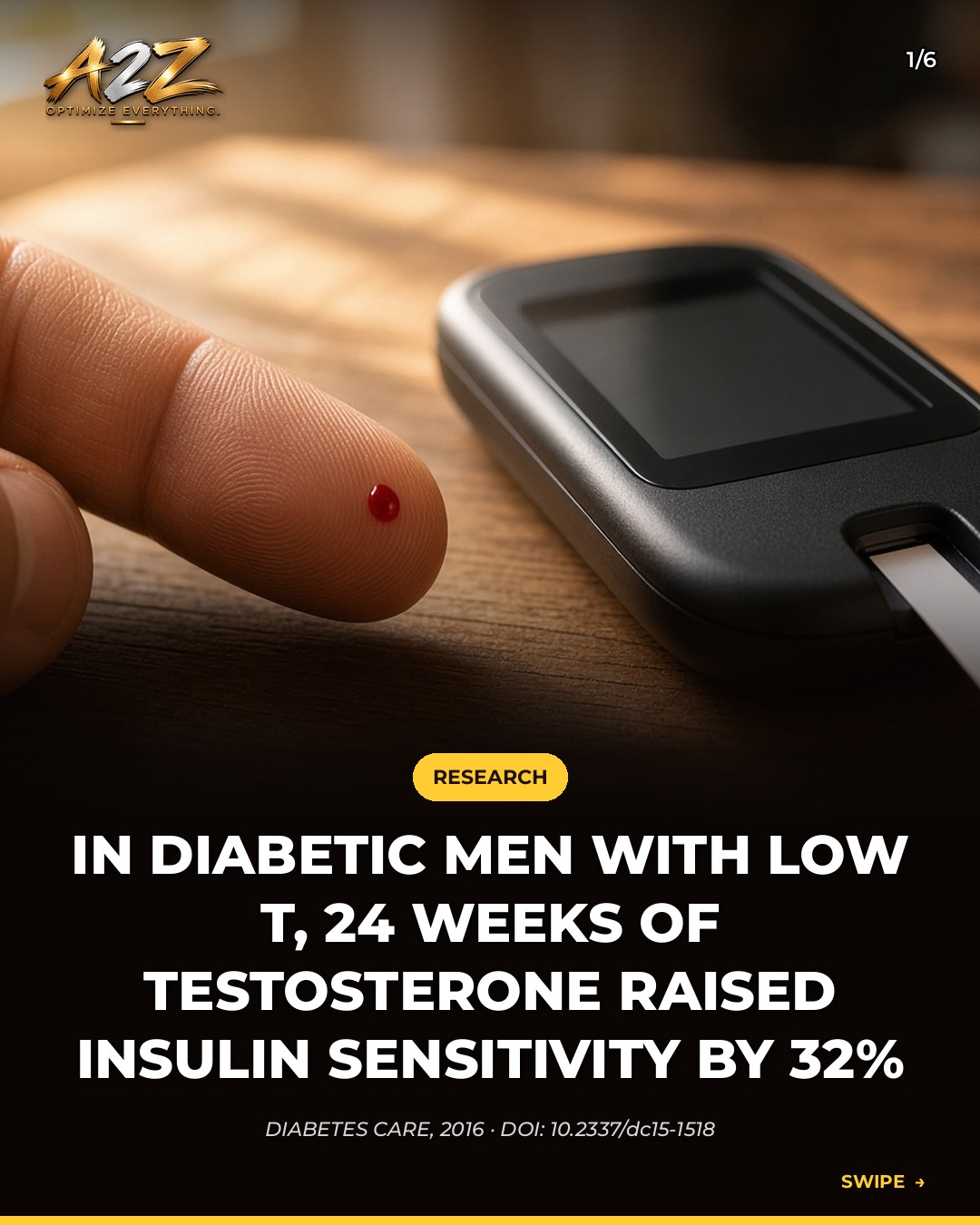
In diabetic men with low T, 24 weeks of testosterone improved insulin sensitivity by about a third and lowered inflammation markers.
Last reviewed 2026-10-04 by Jack Mayeux, APRN, FNP. This page is clinical content and is reviewed on a regular schedule.
Medically reviewed by Jack Mayeux, FNP
In diabetic men with low T, 24 weeks of testosterone improved insulin sensitivity by about a third and lowered inflammation markers.
This article walks through the Diabetes Care (2016) (https://doi.org/10.2337/dc15-1518) paper in plain English: what was studied, what changed, what the limits are, and what it does not prove. Full citation and DOI link (https://doi.org/10.2337/dc15-1518) are at the end, with a PubMed record (https://pubmed.ncbi.nlm.nih.gov/26622051/).
What the study found
Researchers recruited 94 men with type 2 diabetes. The 44 with hypogonadotropic hypogonadism were randomized to testosterone injections (250 mg every two weeks) or placebo for 24 weeks, and insulin sensitivity was measured with a hyperinsulinemic-euglycemic clamp.
In this small trial, insulin sensitivity measures improved with testosterone compared with placebo. It was a small trial, visceral fat didn't change, and the larger TRAVERSE substudy found no glycemic benefit from TRT.
Key finding (from the study record): Insulin sensitivity (clamp GIR) improved at 24 weeks on T vs no change placebo (P=.03); CRP, IL-1b, TNF-a fell.
How the study was done
• Design: Randomized placebo-controlled trial • Who was studied: 44 men with T2D and hypogonadotropic hypogonadism (of 94 screened) • Journal / year: Diabetes Care (2016) • First author: Dhindsa S et al.
From the abstract: OBJECTIVE: One-third of men with type 2 diabetes have hypogonadotropic hypogonadism (HH). We conducted a randomized placebo-controlled trial to evaluate the effect of testosterone replacement on insulin resistance in men with type 2 diabetes and HH. RESEARCH DESIGN AND METHODS: A total of 94 men with type 2 diabetes were recruited into the study; 50 men were eugonadal, while 44 men had HH.
What it means — and what it does not
Useful takeaway: In diabetic men with low T, 24 weeks of testosterone improved insulin sensitivity by about a third and lowered inflammation markers.
Limits and caveats: Small (44 randomized). Visceral and liver fat unchanged. Not a diabetes treatment.
This evidence can inform a conversation with a licensed provider. It is not a guarantee of similar results for you, and it is not a recommendation to start, stop, or change any medication on your own.
Related research we cite
• Testosterone treatment to prevent or revert type 2 diabetes in men enrolled in a lifestyle programme (T4DM): a randomised, double-blind, placebo-controlled, 2-year, phase 3b trial (https://doi.org/10.1016/S2213-8587(20)30367-3) — Lancet Diabetes Endocrinol (2021); also on PubMed (https://pubmed.ncbi.nlm.nih.gov/33338415/). Takeaway: Added to a lifestyle program, testosterone cut the share of men with type 2 diabetes at 2 years by about 41% vs placebo.
How this connects to care
A2Z serves men in Utah with telehealth evaluation, labs, and provider-guided plans when appropriate. The TRT program is $149/month and includes initial labs only. Tadalafil and enclomiphene, sermorelin, and tirzepatide (compounded, not FDA-approved) are separate products.
Relevant pages on this site:
• Tirzepatide (https://a2ztrt.com/tirzepatide) (branded trial drugs are not the same as compounded products, which are not FDA-approved) • Tirzepatide vs. semaglutide (https://a2ztrt.com/tirzepatide-vs-semaglutide) (branded trial drugs are not the same as compounded products, which are not FDA-approved) • TRT program (https://a2ztrt.com/trt)
FAQ
What did this study actually find?
In diabetic men with low T, 24 weeks of testosterone improved insulin sensitivity by about a third and lowered inflammation markers. The design was: Randomized placebo-controlled trial. Population: 44 men with T2D and hypogonadotropic hypogonadism (of 94 screened).
Does this mean I should start treatment?
No. Research informs care; it does not prescribe it. A licensed provider reviews your symptoms, labs, and history before any decision. Results vary.
What are the main limits of this evidence?
Small (44 randomized). Visceral and liver fat unchanged. Not a diabetes treatment.
Keep reading
• What Is a Normal Testosterone Level, Really? (https://a2ztrt.com/post/what-is-a-normal-testosterone-level) • Can You Drink Alcohol on TRT? What Men Should Know (https://a2ztrt.com/post/can-you-drink-alcohol-on-trt) • Does TRT Cause Hair Loss? What the Evidence Actually Says (https://a2ztrt.com/post/does-trt-cause-hair-loss) • TRT and Insulin Sensitivity in Men With Type 2 Diabetes (https://a2ztrt.com/post/testosterone-insulin-sensitivity)
Reference
Dhindsa S et al. Insulin Resistance and Inflammation in Hypogonadotropic Hypogonadism and Their Reduction After Testosterone Replacement in Men With Type 2 Diabetes. Diabetes Care. 2016. https://doi.org/10.2337/dc15-1518 (https://doi.org/10.2337/dc15-1518) · PubMed 26622051 (https://pubmed.ncbi.nlm.nih.gov/26622051/).
Next step
Start a free consult in Utah (https://a2ztrt.com/contact). Bring your questions — including anything this study raised for you.
The TRT program is $149/month and includes initial labs only. Tadalafil and enclomiphene, sermorelin, and tirzepatide (compounded, not FDA-approved) are separate products.
Talk to a licensed provider. Results vary. Not medical advice.
Learn more about this topic:
Read the TRT program and what's included guideTalk to a Utah provider
A2Z is telehealth TRT for Utah men: $149/month, or as low as $119/mo billed $357 quarterly. The first video consult is free, initial labs through Quest Diagnostics are included, and follow-up labs are $74 when your provider orders them. Nothing is prescribed without labs and a provider review.
Related pages